


Heat, PET Bottles and Invisible Plastic
The 20 Largest Sources of Nanoplastics in the Human Body
Microplastics and nanoplastics are no longer just a problem of the oceans or landfills.
They have been found in human blood, lungs, the placenta and even brain tissue. The main question is no longer whether we ingest plastic. The real question is: how much?
Some sources of plastic exposure are so minor that the body can most likely eliminate them efficiently. However, other everyday sources create a surprisingly high burden, especially in hot conditions. That is why it is important to understand which sources are the most aggressive.
(Ranked by their potential plastic migration intensity)
| Rank | Source | Approximate Amount | Migration Intensity |
| 1 | Plastic tea bags | Approximately 17 billion particles per cup | EXTREMELY HIGH |
| 2 | Paper cups with plastic lining | 25,000 – 1,000,000+ per cup | VERY HIGH |
| 3 | Plastic baby bottles | Up to 16 million particles per liter | VERY HIGH |
| 4 | Plastic heated in a microwave | Hundreds of thousands – millions | VERY HIGH |
| 5 | Overheated PET bottles | 10 – 100 times more than cold PET | VERY HIGH |
| 6 | Plastic kettles | Tens of thousands+ | HIGH |
| 7 | Coffee machines with plastic systems | Thousands – tens of thousands | HIGH |
| 8 | Disposable plastic food containers | Thousands – hundreds of thousands | HIGH |
| 9 | Synthetic clothing | Thousands of fibers per day | HIGH |
| 10 | Plastic cutting boards | Hundreds of thousands per year | MODERATELY HIGH |
| 11 | Synthetic carpets | Thousands of inhaled fibers | MODERATELY HIGH |
| 12 | Sportswear | High fiber emissions | MODERATELY HIGH |
| 13 | Household dust | Thousands per day | MODERATE |
| 14 | Chewing gum | Synthetic polymers | MODERATE |
| 15 | Plastic food containers | Thousands+ | MODERATE |
| 16 | Coffee capsules | Thousands | MODERATE |
| 17 | Wet wipes | Microfibers | MODERATE |
| 18 | Cold PET bottle | Thousands per liter | LOW |
| 19 | Glass bottle with a plastic cap | Significantly lower than PET | VERY LOW |
| 20 | Bottles with soft-touch plastic coatings | Long-term mechanical wear | LOW |
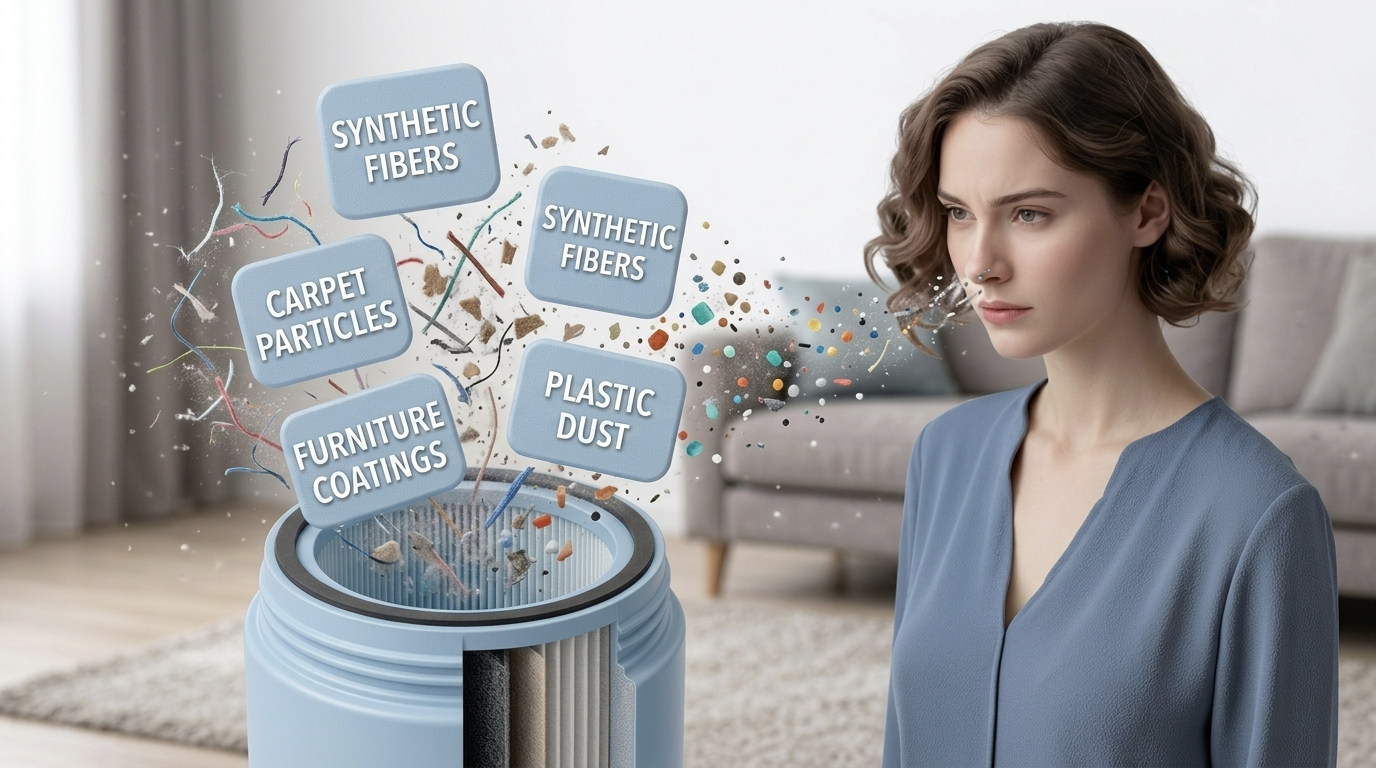
Public discussions most often focus on plastic in water bottles. However, the latest research suggests that one of the largest sources of microplastics in the human body may actually be the air we breathe indoors. Homes, offices and cars accumulate:
People do not only ingest these particles.
They also inhale them.
Especially in:
Polyester, nylon and acrylic are synthetic polymers. Simply put, they are plastic in the form of fabric.
Every time you:
these fabrics release microfibers.
Some end up in water.
Some end up in the air we breathe.
The highest microfiber release occurs from:
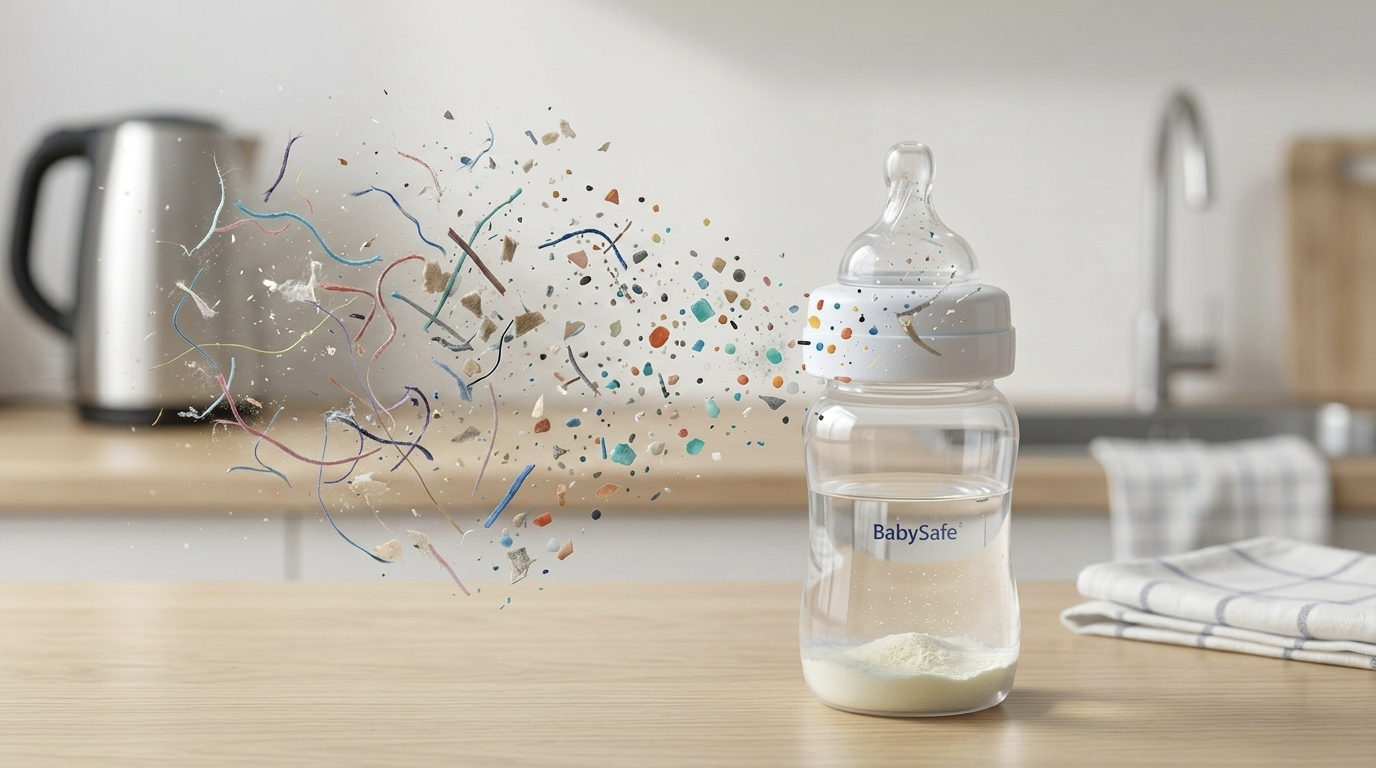
Most baby bottles are manufactured to be “heat-resistant.” They are most commonly made from polypropylene (PP) or BPA-free plastics.
However, “heat-resistant” does not mean “does not release microplastics or nanoplastics.”
It simply means that the material:
A 2020 study published in Nature Food found that polypropylene baby bottles can release millions of microplastic particles per liter when infant formula is prepared with hot water. The hotter the water, the more vigorous the shaking, the more frequent the sterilization, and the greater the number of repeated heating cycles, the higher the migration of plastic particles.
This means that even modern BPA-free plastics are not completely inert.
That is why experts recommend:
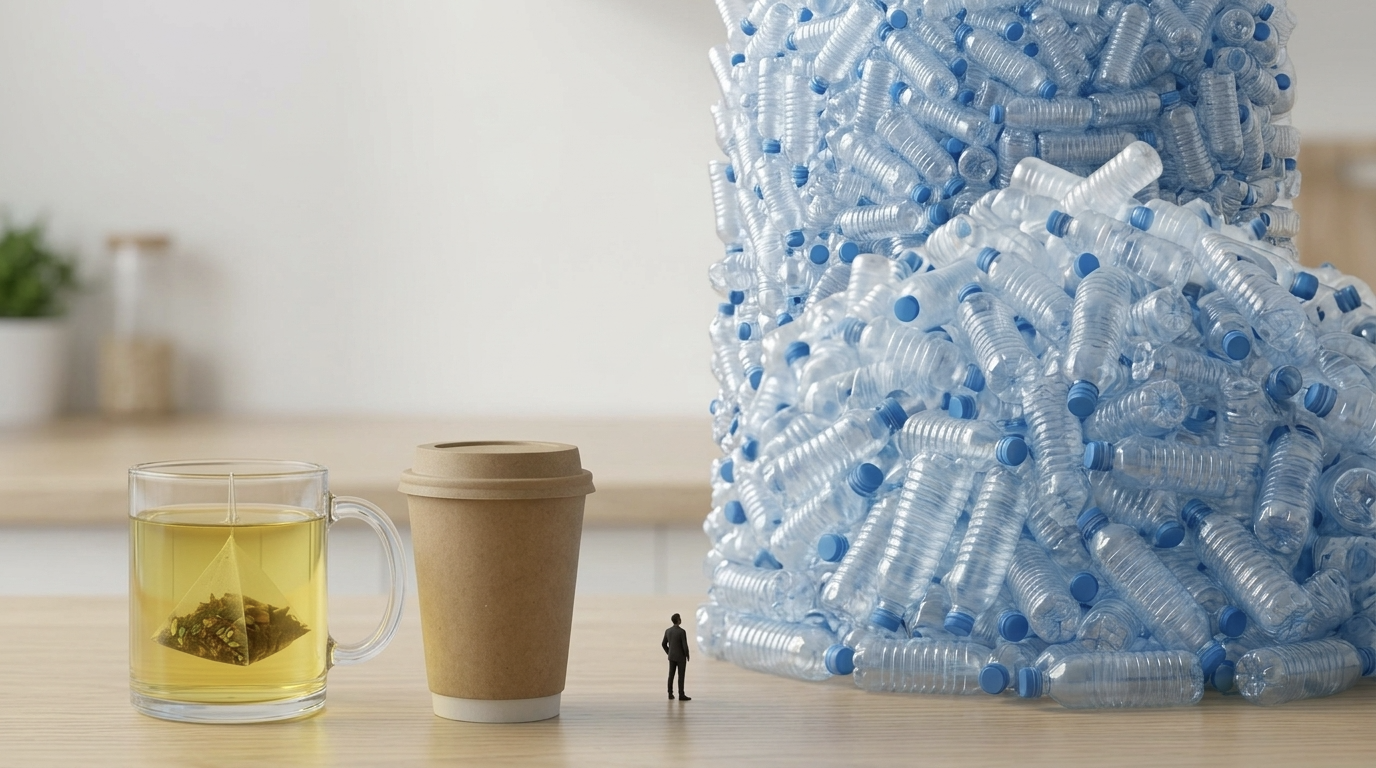
Many people avoid PET bottles. Yet every day they drink tea brewed in plastic tea bags. In terms of particle count, a single plastic tea bag can be comparable to more than 100,000 cold (properly stored) PET bottles.
A person may spend years trying to live a “healthy” lifestyle while, every morning, placing a plastic tea bag into a cup and pouring boiling water over it.
It’s like worrying about getting wet while standing beneath a waterfall.
Everyone should learn to recognize the taste of “burnt” water. Squeeze a plastic bottle and smell the air that escapes from it. If you notice a faint smell of alcohol or synthetic lemon, it is very likely that the water has been overheated. This taste is not just an aesthetic issue.
It is often a sign that the plastic structure has started to break down.
Heat accelerates:
Experienced water enthusiasts recognize this taste immediately.
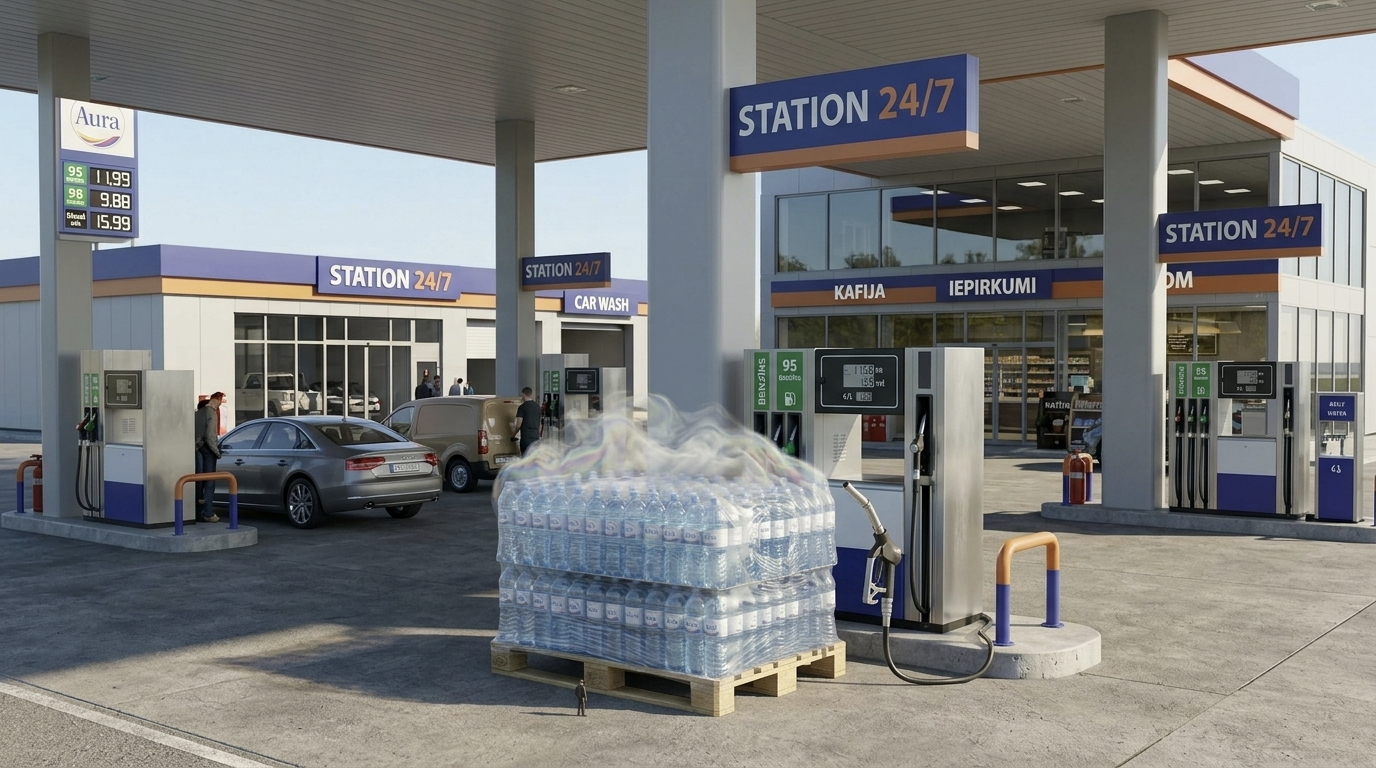
PET bottles are not completely airtight. They are partially permeable to gases, or in other words, “breathable.” This means that volatile compounds from the surrounding environment can gradually affect the contents of the bottle over time.
That is why water packaging often states: “Do not store near strong odors or volatile substances.”
During the summer, this property becomes especially important. At gas stations, water bottles are often displayed right next to fuel pumps and hot asphalt. In high temperatures, PET becomes more chemically active, increasing the possibility of aromatic compounds migrating into the bottle over prolonged exposure. In summer, not only the source of the water matters, but also the conditions in which it has been stored.
Many materials used in modern car interiors are synthetic, including:
When temperatures rise, emissions from these materials increase significantly. That is why, during summer, a car interior becomes not only hotter but also more chemically active. And this is exactly where people often leave their water bottles.
The combination of:
creates particularly aggressive conditions for plastic degradation.

During summer, the temperature inside a parked car can exceed 70°C. This is when PET plastic begins to “fatigue.”
That is why, during summer, you should avoid:
It is safer to store bottles:
Some studies on microplastics in bottled water have analyzed mass-market drinking waters obtained from heavily treated water sources and subjected to filtration.
In contrast, natural mineral water from protected underground sources is generally not treated using reverse osmosis.
This distinction is important because:
can significantly influence the final results.
For this reason, future research should include more detailed comparative studies between natural mineral waters and technologically intensive processed (artificial) waters, which are most commonly labeled as drinking water.
Microplastics enter food not only through packaging.
They can also originate from:
Research shows that ultra-processed foods often contain higher levels of microplastics than minimally processed foods.
Microplastics have also been detected in:
Some plants are capable of absorbing nanosized particles through their root systems from contaminated soil and water. This means that microplastics are no longer just a packaging issue.
They have become a challenge for the entire food chain.
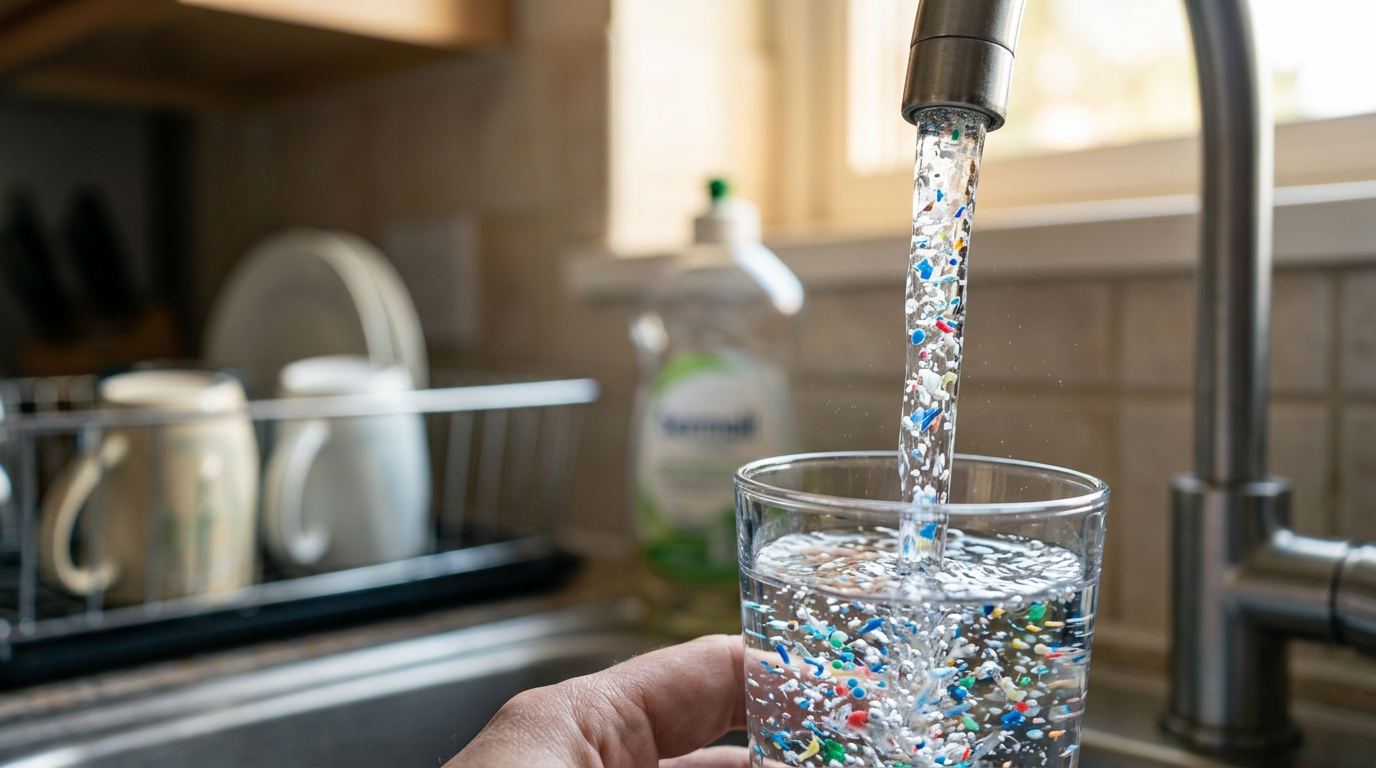
Unfortunately, no.
Today, microplastics have been detected in:
The Daugava River is no exception. In a study conducted at Riga Technical University by a researcher from Panama, microplastic particles were detected in the waters of the Daugava. The main sources were:
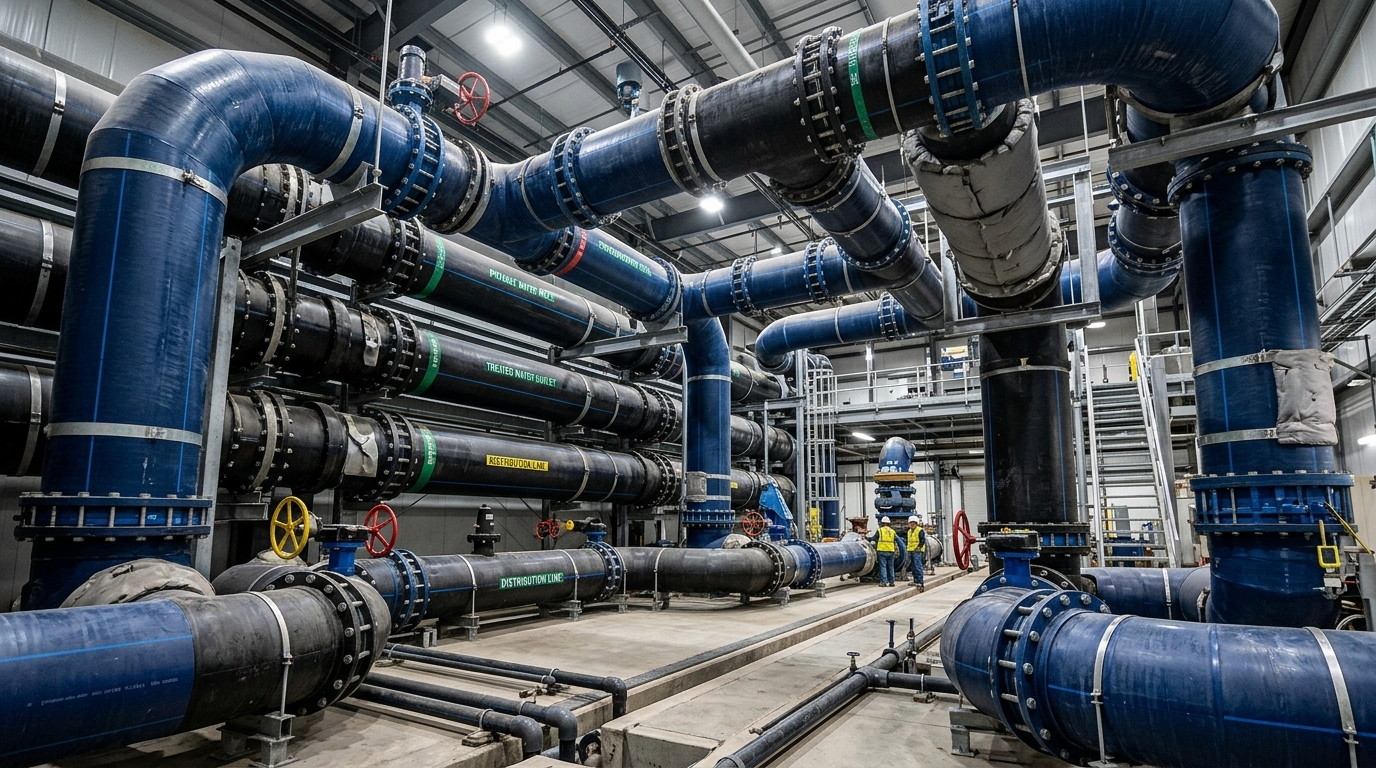
In addition, in many places, old metal water pipes are proudly being replaced with plastic pipes. These pipes are certified for drinking water systems.
However, “certified” does not mean “completely inert.”
Hot water is much more aggressive than cold water.
And it flows through these pipes every day, for years.
That is why the following questions are becoming increasingly relevant:
At the moment, there are still relatively few long-term studies on the migration of nanoplastics from household water systems. However, water quality researchers consider this topic to be one of the next important areas of research. Because “tap water” is also used in food production.
Science does not yet have a complete answer. However, it is clear that the body eliminates part of the pollution through:
That is why all processes that activate metabolism and the body’s natural cleansing systems become especially important.
A positive effect may come from:
A sauna is not a “miracle cure” that melts plastic out of the body.
However, sweating is one of the body’s natural elimination mechanisms.
The main principle is simple:
Reduce the daily plastic burden and help the body work more efficiently.
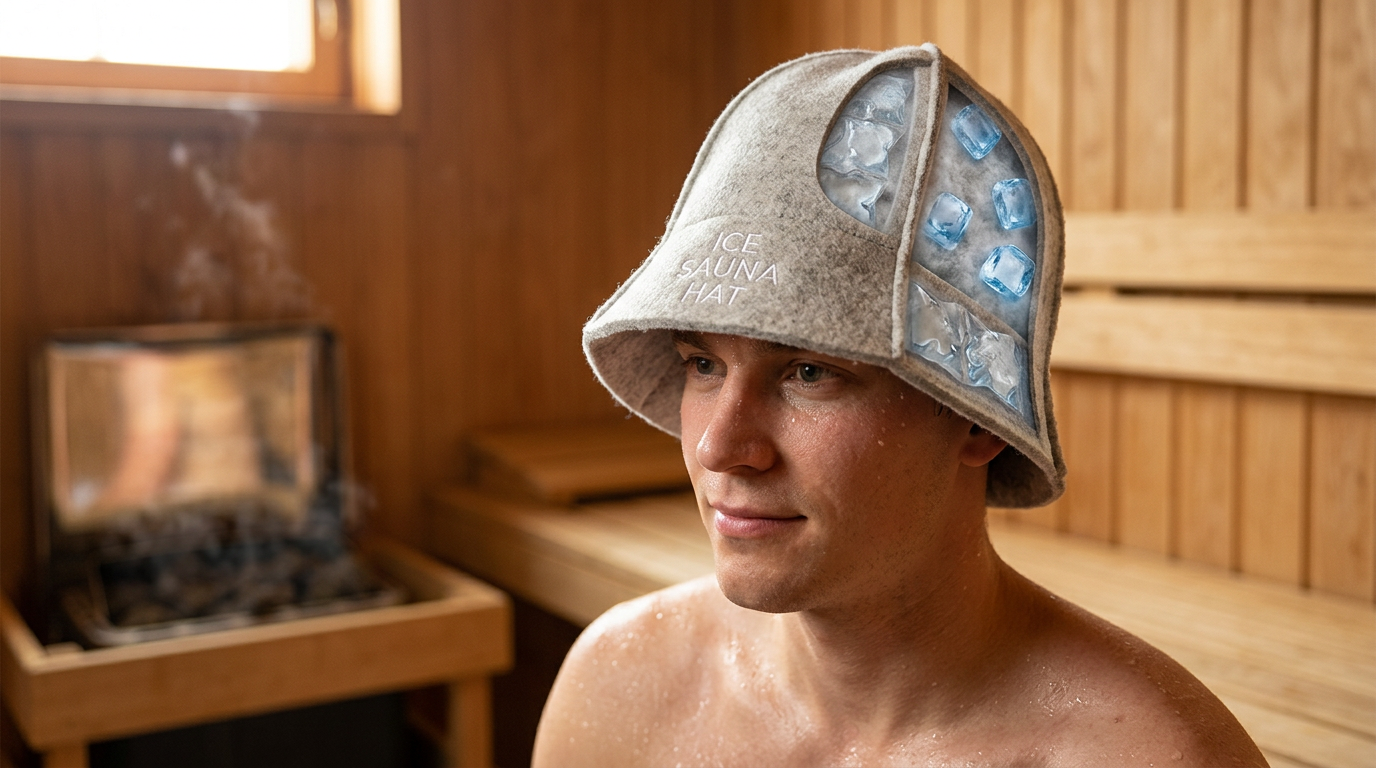
For sauna enthusiasts, I highly recommend trying the ICE SAUNA HAT. It is specially designed with pockets for ice. As the ice melts gradually, it pleasantly cools your head, helps prevent overheating, and makes your sauna experience more comfortable and enjoyable.
It is also important to replenish minerals while enjoying the sauna. I recommend drinking natural mineral water with a high magnesium content, as magnesium supports normal muscle function, helps maintain electrolyte balance, and contributes to the normal function of the heart.
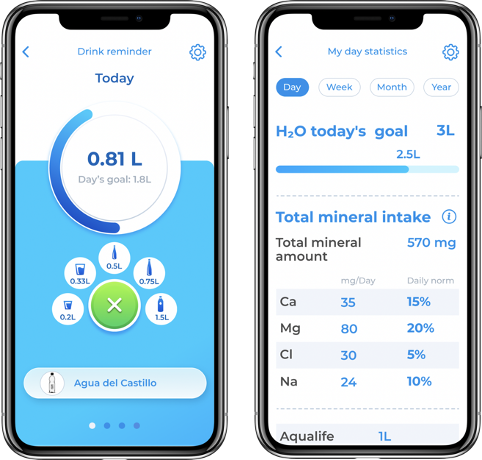
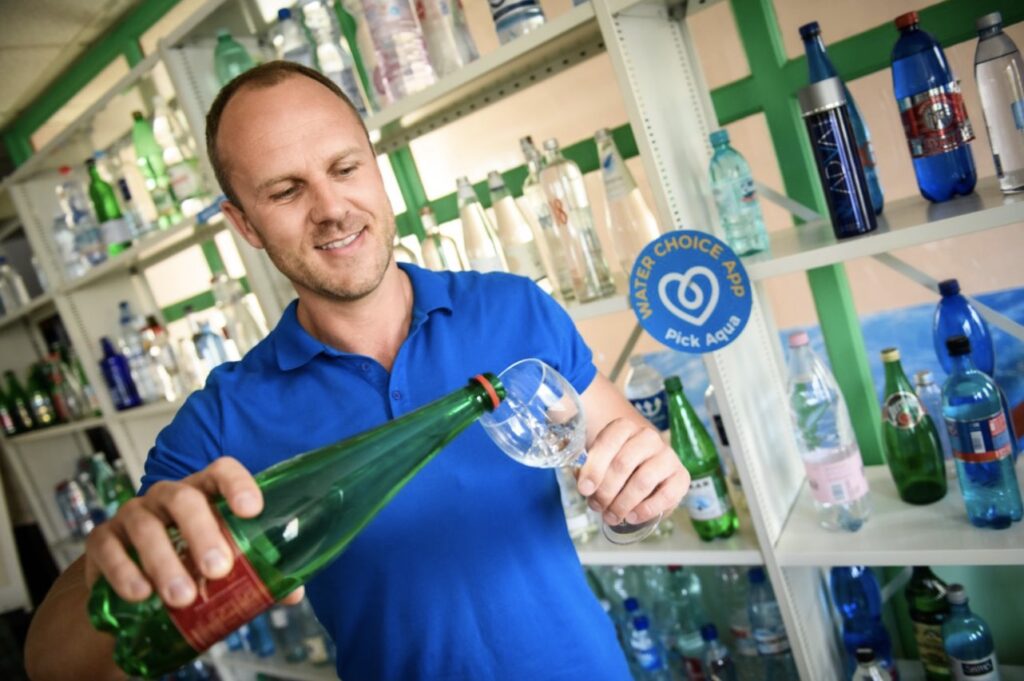
You can compare the mineral composition of thousands of waters in the PickAqua app and use the filters to find the water that best suits your needs.
To learn more about healthy hydration habits and discover the composition and interpretation of all mineral waters available in Latvia, download the PickAqua water selection app.
“Over the course of your lifetime, you will drink approximately 50,000 liters of water – quality matters.
Learn everything about water at www.waterambassador.org
References






Comments are closed for this article!